Sunday, 9 January 2011

MODEL PROFILES: SIRI TOLLEROD


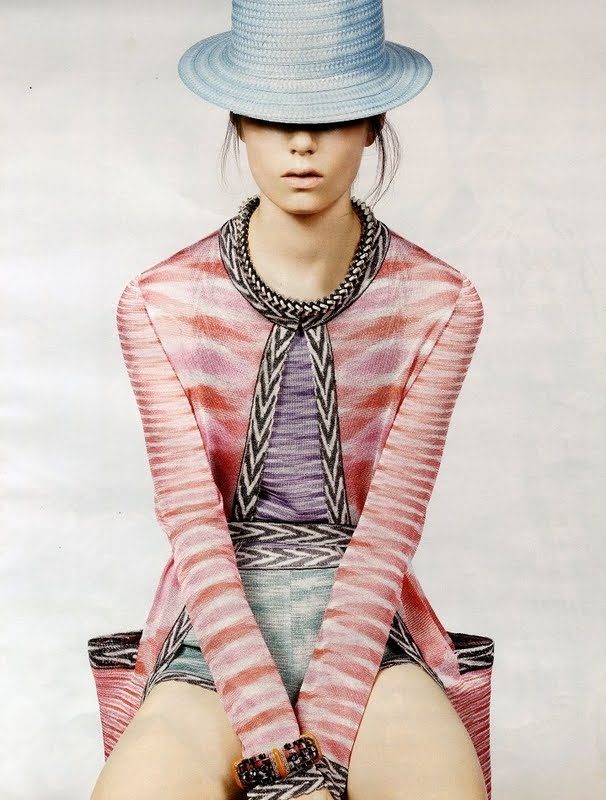
Born on the 18th of August 1988, Norwegian Siri Tollerod has translated global runway success into a career set to explode in 2011.

Siri was discovered at a shopping mall in 2007 and appeared in her first major editorial in June the same year. The client was Italian Vogue. Her high-flying start progressed into substantial campaign work, with Siri representing both DKNY and Prada Sport.

September’s runway season was Tollerod’s ultimate test: a model with hype is not a new phenomenon, the fashion industry is a tough crowd to please and reputations aren’t made until a model’s successfully negotiated Fashion Week. If a model can impress on the catwalk, she moves from being just one in a sea of new faces and becomes a bookable name. Getting signed by an agency often isn’t the toughest challenge for a model; it’s proving your worth as someone who can compete on a level with models who already have years of experience behind them.

Only a few months into her career, Siri’s first international season proved a triumph. Booking spots with Alexander McQueen, Balenciaga, Chloe, Marc Jacobs and Prada, she also opened and closed the D&G show and was the closing model for Lanvin. Appearing on runways in New York, Paris and Milan, Siri was a hit in any language.

Tollerod rounded out the year with editorials for British and Italian Vogue and a Chanel Couture spread for Numero. But Siri’s blockbuster season kept her fresh in the minds of the industry, and in early 2008, Tollerod appeared in Prada’s resort look-book.

Effectively a high-fashion catalogue for buyers and stylists, getting hired for a look-book is on a par with getting a campaign. Siri’s initiation in the world of high-fashion was completed in January when she walked in the couture season. Her slight frame was perfect for haute couture and she walked for Givenchy, Chanel and Valentino, at a point where her career was still being counted in months, not years.

February saw Siri open RTW shows for Jason Wu and Chanel, in addition to walking for 60 other designers. She also landed the cover of Italian Vogue Beauty – a coveted spot famously difficult to get. A good face that can handle tight beauty shots is one thing, but Italian Vogue doesn’t ask for good, it demands excellence. Siri’s ability to meet the toughest client’s demands was furthered by her appearance in March’s edition of Numero. Featuring in an editorial photographed by Karl Lagerfeld, this really was modelling at the sharp end.

In April, Tollerod was featured in www.models.com for her ability to accrue booking after booking. As if to prove the point, she appeared in April’s Russian Vogue, and British, Italian and Chinese Vogue in May. Just a year into her modelling career, Siri was making her presence felt on an international level.

Autumn 2008 saw Tollerod reach even higher, with a campaign for Alberta Ferretti (shot by Steven Meisel) and three separate editorials in September’s edition of Italian Vogue. 2009 was a flurry of editorial and runway work, including a campaign for a new fragrance from Valentino, but Siri’s next career high-point came in early 2010 when she hired by Max Mara diffusion label, Sportmax, to be the face of their new campaign.

The distinctive, unusual images were super-styled, edgy and unique, standing out in a year where the natural look reigned supreme. The quirky look, featuring Siri with pale-skin and bleached-hair, was so successful that Sportmax repeated the winning formula with Ginta Lapina for Autumn. The key to its success wasn’t hard to fathom: the sophisticated approach made the clothes the focus, and it worked, bolstering the label both in terms of image and sales.
Tollerod’s year continued on a high, with a Spring / Summer couture season walking for Armani Prive, Chanel, Dior and Valentino and a feature in Japanese Vogue a month later, dubbing her a top model.

February 2010 saw Siri’s runway career soar once again, with over 50 appearances, including closing spots for Sportmax, Badgley Mischka and YSL. With editorial work for V Man, Allure, Numero and French Vogue, Siri’s career highlight was yet to come. In the autumn, it was announced that she would appear in the next Miu Miu advert alongside Lindsey Wixson.

Miu Miu has a strongly-defined look at its core, with a bold, avant-garde signature style that has made it a must-have label for a whole generation of fashion-savvy girls. Modelling labels with such a strong identity brings its own set of challenges, as there’s always the possibility of being overwhelmed by the clothes. It’s true that the clothes should be the ultimate point of focus, but the most successful campaigns happen when there is a balance struck between the model and the clothes: when both are on top-form, the result is hard to resist. Siri brought what she had learned from Sportmax, and the Miu Miu campaign was pitch-perfect: high-fashion that met aspiration with approachability.

The shot of publicity worked: Tollerod enjoyed another 50-show season in September, appearing for names such as Balmain, Fendi, Chanel, Lanvin, Jason Wu, Nina Ricci, Sportmax and Versace. Siri had finally become part of the fashion modelling elite, a presence in every major show of Spring / Summer 2011, including Marc Jacobs’ effusion of 70’s colour and Jason Wu’s multi-cultural epic.

Tollerod’s ability to carry a label, proved since her signing with Prada Sport in 2007, came full circle when in November she appeared as the only model for Lanvin’s range formulated for high-street giant, H&M. Like Miu Miu, Lanvin has a strong sartorial identity and it takes a skilful model not be outperformed by the look. Siri was visibly at home in the high-fashion designs, and Lanvin’s high-street version of their trademark crumpled dresses went on to become a bestseller.

Working at the heart of the industry since the very beginning of her career, Siri Tollerod has been steadily rising through the ranks, and is this year on the verge of becoming fashion’s next big thing. Recognised from the start, Tollerod’s strength has always been her tendency to multi-discipline. A regular feature of runway, editorial and campaign work, Siri has worked at being consistently good. Her signings with Lanvin and Miu Miu indicate her level of ability, not just to model, but to carry a brand.

What Siri does best is inhabit every look she’s given like it’s a second skin. The common theme running throughout Siri’s photographic work is that, no matter how high-fashion the concept, nothing looks forced. Tollerod wears every look as if she had chosen it herself. If there’s only one note to making it in modelling, it’s just to love everything. Having favourite looks and designers is human, but to make it your business to find the joy in a brand that is a total remove from your own personal style - that’s called being a model.

Versatility isn’t just about being able to handle looks from the romantic to the avant-garde. It’s about putting on the clothes and becoming that person, whether it is for a few minutes on a runway or a whole day whilst shooting an editorial spread. Siri’s career stands for what can be achieved when you model from the inside out. Her popularity for runway alone flags up how easily she can move from the soft, ethereal romance of Marchesa into the ultimate high-fashion experience that is Alexander McQueen.

Her campaign work ranges from an early signing with Prada Sport to her latest booking, modelling for Max Mara Elegante. It’s the modern definition of a fashion chameleon; a model that not only does it all, but convinces completely in every frame.

Where Tollerod’s career goes from here will be the most exciting part of her journey. The bar has already been raised this year with her solo appearance for Max Mara, taking on and representing a mega-brand as the main attraction, not a support act. In 2011, expect to see Tollerod become increasingly visible in an industry where it’s all too easy to blend in. A long-time stand out on the runway, Siri is about to get her moment in the spotlight, because finally it’s her time.

HELEN TOPE

Friday, 31 December 2010

CONTACTING AGENCIES

There are three main ways to contact a modelling agency:

- By post
- By email
- In person

Many model agencies specify which method they usually prefer, but note that when you’re starting out and shopping for agencies, cold-calling is a no-no. The odds of being signed to any agency are slim, but bugging an agency with calls isn’t the way to even out those odds. The key to getting seen is to play the hiring game by their rules. If the model agency you’re after prefers emails, send an email. If another agency holds Open Days, turn up on that day ready to dazzle. Persistence is a valuable asset when starting out in modelling, but use it intelligently and channel that determination.

The first step in contacting any model agency is to prepare some photos. This doesn’t mean spending hundreds, even thousands, on a portfolio. All you need at this stage are a couple of recently-taken photos, one head-shot (head and shoulders, facing the camera) and a full body shot (head-to-toe, again facing the camera). Some agencies also like a profile shot to see how your face copes with different angles - it’s worthwhile checking their websites as they will list exactly what they want.

The key to getting good photos is to keep it simple. Your background should be well-lit and uncluttered – standing up against a plain wall is perfect. In terms of posing, resist the temptation to show off your killer impression of Anna Jagodzinska: for these photos, try to keep your face in a neutral expression – this means no pouting or smiling. It’s harder than it looks and it might be worth practising in the mirror beforehand to know how your face settles naturally and what looks best.

Think of the process as a chance to present yourself as someone who could handle lots of different looks. With this in mind, think about what you wear whilst taking these shots. A simple t-shirt or vest with jeans is ideal: you’re looking to market yourself as that perfect blank canvas, ready to be signed.

In terms of grooming, simplicity is the key: over-working your skin and hair is a rookie mistake. A busy agent doesn’t want to have to spend time scrutinising a photo of someone who’s covered in make-up to see what’s underneath. Keep the skin clean and fresh – no make-up is preferable but a little dab of concealer here and there is fine. With hair, swept back off the face to show your bone structure works well, and it will also demonstrate how light hits your face. These photos are very important, and the temptation to hide behind a comfort blanket of make-up and hair product is immense, but any good agent will be able to tell if you have potential from a couple of simple shots. Once you are armed with a set of photos you are happy with, here’s how you go about approaching an agency.

By post

Contacting an agency by post is fairly straightforward. Send your photos, along with a SAE and brief covering letter (outlining any previous experience and your vital statistics), to the model agency marking it for the attention of their ‘New Faces Division’ (every agency has one).
Your vital statistics will be the following:

- Height
- Chest / bust size
- Waist & hip measurements
- Age
- Hair and eye colour
- Dress and shoe size

When compiling your statistics, it is crucial to be honest. Not only is it good modelling karma, but adding an inch or two to your height, or shaving an imaginary inch off your waist would be a terrible mistake. If you write off to a modelling agency, stating that you are 5’9” when you’re in fact 5’6”, the agent will not thank you for wasting their time when they agree to meet you in person. If you hover between measurements, always state your exact size. There’s no shame in being 5’8” ½, but saying your waist is 24 inches when it’s closer to 25 can make a difference. You want to start your relationship with any agency off on the right foot, and being absolutely honest is the best way to start.

By email

Rapidly becoming the most common method of contacting a modelling agency, many agencies now have their own dedicated page for people who want to be considered for their New Faces Division. If your chosen agency has a page like this, you can directly upload your photos directly onto their website. Many of these agencies will also have an online form you can fill out, adding your contact info and vital statistics. Bear in mind that if the agency likes your photos, you could well be asked to meet with them in person: padding your CV or spinning your stats so they look more attractive to an agency doesn’t work in real life. Modelling is one of the few professions where starting with zero experience isn’t a problem. If you have potential to work in the modelling industry, someone will spot it.

In person

Some agencies have regular ‘open castings’, which anyone can attend and meet with agents to see if they have modelling potential. Usually, if this is an option, it will be listed on an agency’s website with dates and times.

Take this as gospel: if an agency has an Open Day and wants would-be models to attend the agency on Tuesday at 10am, turn up on Tuesday at 10am. Do not assume that the agents will have hours at their disposal to spend looking at new faces; many times the ‘Open Day’ is little more than a couple of hours at most, because time spent away from existing clients and models has the potential to lose the agency valuable income. Therefore, take their time seriously and be punctual. It’s also good training for when you become a model, as time-keeping is as important as having a decent runway walk. If you know you’re one of those people who’s at least 10 minutes late for everything, plan and organise your day accordingly. Adjust the time on your phone so it’s running 10 minutes fast if you have to, and work to that.

If you’re able to get to an open casting, present yourself the way you did during your photos. Think clean, modern and polished. Presenting yourself in this way not only flags up to an agent that you’re someone who’s done their research, but also someone who’s serious about committing to a career in modelling. Don’t forget to bring a copy of your original photos along with you as well, so the agent can see how your features translate on film.

Whatever way you decide to approach an agency, listen to any advice and constructive criticism that’s offered. If an agent suggests you may not be right for a sector of the industry because of your height, don’t automatically give up. If you’re aged 16 or under, it might be worth waiting 6 months before trying again, as you may grow that extra couple of inches which might make all the difference.

However, if you’re about as grown as you’re likely to get, and the issue is that your look won’t fit in a particular section of the industry, you may have to accept that you’re getting advice from someone who knows what they’re talking about. If you’re 5’5” and want to break into high-fashion where 5’9” is the norm, you will have to face the fact that the odds of succeeding are stacked against you. There are always exceptions, especially in high-fashion where tastes and trends change so quickly, but in order to break through those barriers you will have to be truly exceptional.

When you are contacting modelling agencies, accept that rejection is part of the whole experience, and be flexible and open-minded when it comes to looking out for opportunities. If an agent suggests you might be better off exploring another area of the industry, don’t be afraid to ask for recommendations on where to go next. They will know who will be best placed to help you in that search. Don’t give up too easily: it’s a big modelling world out there – if you’re not quite right for one agency, you could well be a perfect fit somewhere else.

HELEN TOPE

Sunday, 19 December 2010

MODEL PROFILES: TANYA DZIAHILEVA


Born in Belarus in 1991, Tanya Dziahileva had an early start in modelling. Signed to an agency at the age of 14, her debut on the Spring / Summer 2006 catwalk saw her appear for Prada, Chloe, Chanel and Alexander McQueen.

Tanya’s launch into high-fashion continued with editorial work for British Vogue in February 2006 and a campaign for Hugo Boss featuring Tanya with Agyness Deyn. Both models were a telling choice for the brand; Deyn had just broken into the industry herself, with her unique street style and peroxide hair already making waves.

Aged 15, Tanya scored her first major solo campaign when she became the face of YSL, photographed by Juergen Teller. Normally such a high-profile booking would daunt even an experienced model, but Tanya handled the pressure and expectation like a seasoned professional.

2007 saw even greater success, with Tanya booking a campaign for Lanvin, photographed by the legendary Steven Meisel. If Tanya felt nerves, she didn’t show them – and within months she had also secured a fragrance contract with Nina Ricci and became the face of the Michael Kors brand, replacing Carmen Kass.

The model-switch represented a key change in fashion’s tastes. Michael Kors, a label synonymous with American luxury chic, Tanya was not the most obvious choice, but her hiring was a sign that fashion was already beginning to shed the idea of a certain type of model for a certain type of campaign.

Tanya’s first runway season of 2007 saw her walking in shows for Alberta Ferretti, Calvin Klein, Chloe, Dior, Givenchy, Marni, Oscar de la Renta, Proenza Schouler, Vera Wang and Zac Posen. Her booking sheet was a smattering of newly-formed design houses, such as Proenza Schouler and Zac Posen, plus more established labels like Oscar de la Renta and Givenchy.

But her breakout season came in September when she was hired for 71 shows. She was also picked to open the Versace show, and closed four shows including Phillip Lim, Celine and Valentino. Incredible as these achievements were for a model that was only 16 years old, 2008 would ultimately be Tanya’s blockbuster year. She landed two major campaigns; one with Anja Rubik and Maryna Linchuk for DSquared, and the second with global brand Ralph Lauren.
Tanya’s growing status as one to watch was cemented further when she booked over 70 shows for February 2008. The same month, she got her first cover, with Russian Vogue. The seal of approval from Vogue took Tanya’s career to the next level, getting her bookings in the couture shows in July. Standing at 5’ 11”, Tanya was height-perfect for couture and made appearances for Armani Prive, Dior and Valentino.

Couture’s reputation for being notoriously tricky to model is well-founded, but Tanya’s body of runway experience meant her debut in Paris was earned fair and square. Far from being elitist, haute couture is probably the fairest sector of the industry when it comes to hiring: ability wins over hype every time. Couture modelling requires a level of skill beyond ready-to-wear, with models being asked to effectively play a character – whether that’s giving Armani’s space-age glamour gowns a touch of gravity, or embodying John Galliano’s haughty equestrian fantasy. Haute Couture is a hybrid of fashion meets theatre, and Tanya disproves the myth that having a memorable face means you can’t be adaptable.

In August, Tanya did her first major editorial with U.S Vogue, shot by Steven Meisel, followed by a slot in Japanese Vogue and a feature in Russian Vogue where Tanya was dubbed a ‘top model’. Russian Vogue has a particularly good track record of recognising model talent: their decision to devote an entire issue to Natasha Poly launched her career into the stratosphere.
Tanya’s runway season in September was further proof that if a top model needs to be versatile, she met that requirement in spades. Opening and closing shows for Elie Saab and Yohji Yamamoto, Tanya’s ability to morph from one aesthetic to another couldn’t be clearer: it’s hard to think of two designers more different than Saab and Yamamoto. Saab’s reputation as a perfector of red-carpet glamour and Yamamoto’s clean, post-modern vision make them direct opposites, but Tanya’s keenly-honed runway skills meant she booked appearances for both.
September ’09 saw Tanya skip New York, London and Milan Fashion Weeks, concentrating solely on Paris with bookings for Alexander McQueen, Dior, Hussein Chalayan and Lanvin. But her experience of dealing with challenging catwalk was tested to its limit in March 2010 when she was asked to participate in a runway show, housing the final collection by Alexander McQueen, only a month after his sudden death. Part of a select group of seven models, the resulting show was subdued, but the work, stunning.

Tanya’s working relationship with the designer came full circle when she was asked to take part in an editorial for U.S Vogue. Called ‘Noble Farewell’, the layout showed Tanya and other models also featured in McQueen’s final runway show, wearing the collection and about to be packed away in crates, preserving McQueen’s work for all time.

It’s hard to fully gauge a designer’s worth during their lifetime, but the moving tribute paid by American Vogue was industry wide in its impact. Tanya’s final note of 2010 was another act of homage to McQueen. Fronting the September cover for Spanish Vogue, Tanya modelled one of Alexander’s now famous final looks. The heady baroque design was anchored by Tanya’s quiet and dignified gaze. No tricks required; this was modelling done so deftly that it looks like Tanya is doing nothing at all. A true sign of a top model is their ability to do more by doing less, and it’s a skill Tanya has mastered absolutely.

Her face has become one of the most recognised and recognisable in the industry, and even though her name is somewhat less familiar outside fashion circles, Tanya has become a supermodel by stealth. Her mix of quirky beauty and traditional supermodel traits sees Tanya competing – successfully – with newer models, even though her career is heading into its 6th year.

Tanya’s status as one of fashion’s most prized models has been hard-worn, with Tanya being catapulted into the spotlight when she was just 14. Acing an YSL campaign shoot at 15 years old is an extraordinary accomplishment. Her exhaustive body of work, featuring runway, editorials and campaigns with every major designer in the world, points to a model that thrives on hard work.

Tanya’s launch into the fashion world in 2005 came a decade after models Kristen McMenamy and Stella Tennant created a storm as faces that were ‘ugly / beautiful’. The mid-Nineties saw models appear whose look was unusual and challenging, a significant departure from the glamorous faces that populated the Eighties. Especially loved by European designers, such as Karl Lagerfeld and Jean Paul Gaultier, public opinion was strongly divided. Many didn’t get the appeal of such faces, others saw it as further proof that ‘high fashion’ had very little to do with ‘real life’. As vague as both these concepts are, the willingness of fashion to make beautiful clothes just that little bit ugly, transformed the industry. This was fashion taking the blinkers off and looking out on a wider definition of beauty. Poses became more angular, less defined: supermodels like Tyra Banks and Kate Moss began to appear in editorials where their bodies were slumped and their eyes cast away from the camera. The guiding principles were awkward rather than poised, quirky rather than sunny.

These new ideas on how to present high-fashion trickled down through the industry with modelling agencies finding themselves not automatically looking for ‘money girls’ – the kind who sell perfume by the barrel-load – but girls who could not only do, but embody, one word: editorial. But as editorial took hold, everyone wanted a piece of the new look. The quirky girls began getting hired not just for the high-fashion jobs, but for everything. It was nothing short of a revolution.

Tanya, along with Agyness Deyn and Coco Rocha, has become one of the first quirky girls to get the big-budget, big-name campaigns that were normally reserved for more conventional beauty. But Tanya isn’t considered a token choice: she has become one of the leading faces of a generation that accepts diversity as the norm. What’s considered on-trend alters constantly, but faces like Tanya’s have changed fashion’s mind about what beauty really is, and that idea refuses to budge.

Tanya’s portfolio boasts the expected avant-garde shoots and campaigns, but she is also a cover girl several times over. With seven Vogue covers to date, Tanya’s career is part of a much larger success story for modelling in general. With current hot-ticket Joan Smalls just announced as the new face of Estee Lauder for 2011, widening the terms of beauty has allowed models from every ethnic background to not only enter the industry, but to get their shot at those big-name bookings.

This revolution started on the runway, and this embrace of every kind of beauty came full circle during Jason Wu’s show last September. Featuring models from European, Asian and African-American backgrounds, it is incredible to think that ten years ago; this gathering would have been unthinkable, simply because it would have been impossible. Finally, their faces fit.

HELEN TOPE

Sunday, 5 December 2010

MODEL PROFILES: FRIDA GUSTAVSSON

Born 6th June 1993, Swedish-born Frida Gustavsson has, in the space of two years, become one of fashion’s most wanted.

Frida began modelling at the age of 15, moving to Japan the same year to pursue a career. Signing with IMG in 2009, Frida began her runway career in earnest, booking spots with Elie Saab and being picked to open the Valentino Couture show – an extraordinary honour for a newcomer.

Her connection with Valentino resurfaced in September, when Frida did her first editorial with Italian Vogue. Photographed in head-to-toe couture, Frida’s debut on the international fashion stage singled her out immediately as no run-of-the-mill model.

The impact of the editorial was confirmed when Frida secured ready-to-wear bookings with Carolina Herrera, Calvin Klein, Marc Jacobs, Oscar de la Renta, Rodarte and Lanvin. Her super-stellar arrival, including closing spots for Just Cavalli and Gareth Pugh, put Frida firmly in the fashion spotlight. Both www.style.com and www.models.com subsequently featured Gustavsson as a Top 10 Newcomer.

January 2010 began with another couture season, with appearances for Valentino, plus Armani Prive, Elie Saab, Dior and Chanel, with additional editorial work for W and Italian Vogue. But Frida’s next RTW season would prove to be a monster hit.

Opening shows for Sophia Kokosalaki and Costume National, Frida’s mega season featured over 70 appearances ranging from Phillip Lim, Burberry and Chanel to Louis Vuitton, Rag & Bone, Thakoon and Versace.

Frida was in every show of note in a season filled with hit after hit, becoming an indispensable feature of Fashion Week, from Burberry’s aviator chic to Louis Vuitton’s glamorous retake on Fifties style. Frida’s astonishing run of success continued to grow, with her first international cover in May. Appearing for German Vogue and shot by Greg Kadel, the end result was both glamorous and enigmatic. With half her face obscured, Frida’s performance was pure modern retro. Referencing models from the 1940’s and 50’s, the cover could almost be from the archives, but it managed to be both classically appealing and absolutely contemporary. It’s hard to handle retro shoots as the aim is to evoke vintage, rather than directly copy it, but the tone struck by Gustavsson and Kadel was note-perfect.

Frida also made her debut in American Vogue in May, and in July, covered couture season, walking for Dior, Jean Paul Gaultier, Armani Prive and, again, Valentino. Gustavsson’s reliability on the runway had eventually translated into some lucrative campaign work, with Frida impressively landing a spot as the face of Marc Jacobs’s fragrance, Daisy.

Her next bookings for runway (Spring / Summer 2011), included prestigious opening spots for Anna Sui, Marc by Marc Jacobs and Lanvin. Also scoring a finale spot with new designer Prabal Gurung, Frida’s bookings included appearances for every major design house. Frida rounded out the year with editorials for French, American and British Vogue, and as couture season begins again in January, Gustavsson’s career trajectory is set to transform this fashion favourite into a force to be reckoned with.

The glory may be heaped on the campaign girls, but success in runway should never be underestimated. Frida’s success hasn’t rested on face-time with the public. It’s unlikely that anyone outside the fashion world (or not an avid follower), would be able to identify her with any degree of success. But fashion’s multi-discipline arena allows to models to find and develop their own strengths. While undoubtedly talented at editorial, and with cover and campaign work beginning to rack up, Frida’s true strength has been to master the very core of modelling: runway.

It is easy to forget, but runway remains for designers the most important aspect of their career. Twice a year designers submit their ready-to-wear collections to be scrutinised by the fashion world. Runway, more than any campaign, is a calling-card, telling us where the designer wants to take their vision not just now or for the next six months; it is a projection of their game plan; the designer they ultimately want to become.

A ‘good’ collection becomes part of the fashion experience, drip-feeding hem lengths and colour combinations down to the high-street, but a ‘great’ collection forms its own style language. Prada made us fall in love with the humble bowling bag; Karl Lagerfeld’s modernising of the Chanel tweed jacket made it a wardrobe essential and Marc Jacobs gave grunge a glamour makeover, transforming it into the urban uniform worn across the world.

A runway collection that has true impact does more than raise a designer’s profile: getting it right – and that includes hiring the best models – can make the difference between a designer being moderately successful and becoming a legend. When your name and your label become interchangeable, you’re definitely doing something right.

Frida is part of a select group of models that hold a unique influence. Fashion may love star power, but it loves consistency more. Frida’s face may not have the immediacy of a Lindsey Wixson or a Jessica Stam, but she – and models like her – form the backbone of the fashion business.

Frida’s runway CV features some of the most hotly-tipped talents to emerge in a decade. Designers like Prabal Gurung and Mary Katrantzou hire Frida because she is an established name that comes without the baggage normally associated with a star turn. She can fully commit to any vision, any sartorial point of view, and make it believable. For a new designer, wanting to make their mark, it’s an easy sell.

Frida’s power as a top runway model is made even clearer when it comes to couture. Standing at just over 5’9”, Gustavsson is nearly two inches shorter than the industry standard for couture, where models normally peak at 5’11”.

It is highly unusual for a model under 5’10” to get any couture bookings, simply because the often complex and dramatic designs demand height. The fact that Frida routinely appears on some of the best couture runways in the world, points to her ability to understand high-fashion. Models at this level aren’t just glorified clothes-hangers; they’re interpreters.

Translating a designer’s vision into something beautiful and, crucially, covetable is a task that falls to the model who is required to take something that could in the wrong hands become costume, and instead take it to a level where clothes become poetry. Runway modelling, at its best, works when the model truly knows and appreciates high-fashion.

Her appearance in the final collection by Alexander McQueen earlier this year, shows how much a part of the community she is; the collection was left incomplete by McQueen’s death in February, with only 16 completed looks to showcase, only 7 models were required. Frida was selected to form part of this group, along with Iris Strubegger, Tanya Dziahileva, Polina Kasina and Karlie Kloss.

With all eyes on this final tribute to the designer, Frida was part of a history-making moment, and in fashion, those tend to be few and far between. When everything is focused on the here and now, those rare moments, where fashion steps back and takes a breath, leave a mark that is indelible.

Girls like Frida are the life-blood of high fashion. Strip away the hype and the glamour, and what’s left is a core group of models who are there because they respect high-fashion. Frida has created a space for herself in the fashion world by virtue of her genuine love for fashion, because fashion evolves not just on ideas but relationships too. A model that gets it, the lure of designer fashion, not as a status symbol, but for its own intrinsic worth, is a model who will always be in favour. It’s as simple as that.

HELEN TOPE

Sunday, 28 November 2010

WHICH MODELLING AGENCY IS BEST FOR YOU?

This may seem like an obvious question, with an even more obvious answer, but on closer inspection, determining which agency you want to aim for says a lot about the kind of model you want to become.

Most people think of modelling purely in terms of high-fashion. But the faces you see, such as Liu Wen (pictured), in editorials for W or Marie Claire, are only one small section of the modelling industry. If you take even a brief look around you (billboards, promotional events, even television adverts), it suddenly becomes clear that modelling is a much larger industry than you may have first thought. This is ultimately good news, as when you assess your weaknesses and strengths as a model, you may find you’re suited to more than one style of modelling, or even belong in an entirely different category than you might have first imagined yourself in.

Being flexible about your career aspirations is the key to being a great model. Being realistic about where you can place yourself in the industry will save you a lot of heartache and rejection, and may even get you started sooner than you think.

Fashion / editorial
Has a well-deserved reputation as the toughest section of the industry to crack. If you’ve even watched one episode of any ‘Top Model’ series, it becomes self-evident that the requirements to get even a foothold in this sector are often exacting and complex.

It sounds strange, but being beautiful isn’t an automatic right of admission. This corner of the market is notoriously competitive, and agencies are always looking for the next face that will become the darling of high-fashion. If you’ve watched ‘Top Model’, you will know that the ‘cheerleader’ contestant – the girl who turns heads in real life – isn’t always guaranteed success. It’s a harsh truth that conventional good looks do not always translate well in the world of high-fashion. Many models prosper when their look offers something a little off the beaten track. Having features that photograph well is a must, along with height (usually at least 5’ 9” although exceptions are sometimes made), and a body that’s slim and evenly proportioned (the famous ‘clothes hanger’ body type).

Having a body that’s born to wear haute couture is a definite plus, but with model agencies looking for high-fashion faces, it’s all in the x-factor; that indefinable quality that makes someone memorable.

This can be an advantage if you’re quirky rather than pretty and tastes change so fast in editorial fashion that you can quite literally be ‘wrong’ one week and the absolute ‘face of the moment’ the next. It goes some way to explaining how a catwalk model can work for months, sometimes years, and suddenly become the girl everyone wants to work with.

However, rejection is a guarantee when trying to break into fashion modelling. The spots available are limited, as editorial is so specific in what it asks of new models. This is the sharp end of the business, and it’s not unusual to find yourself retiring before the age of 25.

But if you really think you have what it takes (and be brutally honest with yourself), you could end up working with some of the best photographers, stylists and editors in the world. Your time in the limelight may not last long, but a good career specialising in editorial could provide opportunities you never thought possible.

Catalogue / commercial
Once considered the poor cousin to editorial, commercial modelling is rapidly becoming one of the success stories of the industry. If you have good, photographable features but think you’re too old / short / girl or boy next door to get into high-fashion, this could well be the best option for you.

This type of modelling spills over from print ads into TV work and you don’t have to be an expert to figure out that there’s a lot more work to go round. Think of the number of adverts you see in any one day: toothpaste, lingerie, sportswear, hair-care – each one requires a face to sell that product and that person could be you.

The requirements listed by any commercial agency are similar to high-fashion, but with one crucial difference: you must have a look that is photogenic, warm and accessible. A great smile could quite literally make your fortune.

Having the basics – good skin, hair, teeth and nails will help you get through the door of an agency, but personality and flexibility is what could get you signed on the spot.

Just as with high-fashion, the client rules. What they want, you have to deliver. Being a good listener, and more crucially, able to work quickly and effectively with a creative team is an essential for this type of modelling. It’s a misnomer that ‘catalogue’ is for models that weren’t good enough for high-fashion. You need many of the same skills, and pressures of time and budget are just as high. Getting the right look on camera is a non-negotiable, and the only difference is that you could be modelling catalogue rather than couture. But making cheaper fabrics look just as good on film as their pricier counterparts is all about attitude. Wear catalogue with the same panache you’d reserve for Chanel, and your career will soar.

The key difference with commercial modelling is the work, or rather the amount of it. If you’re a success you will definitely know about it, because you will be working around the clock.

As I said earlier, catalogue has been one of the most resilient sectors of the modelling industry when it comes to bucking the economic downturn. In order to buy a product, we have to know about it in the first place, and the smarter companies have kept their advertising budget the same or even increased it during the recession.

Commercial modelling may have suffered from a self-image crisis in the past, but with commercial models finding themselves in constant demand, this area of the industry has finally had its Cinderella moment.

The good news for any budding commercial model is that your career could indeed have healthier long-term prospects than your editorial counterpart. Look at many of the big-brand beauty ads and they’ve been in the habit of using models that are a similar age to the consumers who will use the product. Gone are the days when an 18-year-old would advertise anti-ageing face cream. Everyone’s more media-savvy these days and that includes us, the consumers.

Advertisers have latched onto this, and it is now not uncommon to see models in their thirties, forties and beyond fronting campaigns for names like L’Oreal, Revlon and Nivea. Want to work in an ever-expanding industry? Commercial modelling may well be your best option to that most elusive thing in modelling: longevity.

Body parts modelling
One of the newest sectors of the industry, this is exactly what it says it is. Watch any advert for washing-up liquid and you’ll instantly spot a pair of perfectly-manicured hands. These will almost certainly not belong to the commercial model fronting the ad, but will belong to a model that specialises in body-part modelling.

Hands, legs and feet are usually the most in-demand and if you have hands that get regularly complimented, there might well be a career in it.

The work can range from the kitchen sink to beauty editorials or accessory shoots (very often a hand-model is drafted in to assist with fashion shoots where close-ups are required and the main model’s hands may not be up to such scrutiny).

This type of modelling can be extremely lucrative, but it requires a lot of patience on your part as it can involve repetitive, sometimes uncomfortable, awkward poses. If you’re low on patience and your tolerance for discomfort is set at zero, this might not be the best modelling option for you.

The downside to this kind of career is that you have to be extra vigilant when it comes to knocks, scrapes, bruises and falls. If you fell and bruised your hand, the worst case scenario would be no work, no bookings or even go-sees until it had fully healed. Some established body-part models even have separate insurance policies taken out in case of even more serious or prolonged injuries which can seriously impact on their ability to make a living.

The good news is that this kind of modelling provides regular work, and just with normal modelling, if you work well with creative teams and deliver results that clients are happy with, you can make a name for yourself and a very comfortable living into the bargain.

Finding your niche in modelling can take a while, but doing some preparation and groundwork is never a waste of time, in fact, quite the opposite. Whether you want to aim for the giddy heights of high-fashion, or want to opt for a more commercial angle, knowing your strengths in relation to what an agency is looking for is crucial if you want a career with a game plan. In the world of modelling, a little well-aimed self-promotion goes a long way.

HELEN TOPE

Sunday, 14 November 2010

MODEL PROFILES: JACQUELYN JABLONSKI

Born in 1992, New Jersey native Jacquelyn Jablonski started her career signing with prestigious agency Ford Models in 2007.

In January 2008, Jablonski hit the headlines when she became a finalist in Ford’s ‘Supermodel of the World’ contest. A competition famous for cherry-picking the very best of new modelling talent, Jacquelyn’s placing got her noticed by the industry, with www.models.com showcasing her as a face to watch.

Ford, an agency with a reputation for not only spotting but cultivating talent, built on Jacquelyn’s early success with runway bookings for resort collections (Proenza Schouler, June 2009) and pre-fall appearances for Emanuel Ungaro.

The obvious move on Jacquelyn becoming a Ford finalist would have been to launch her immediately into Fashion Week. But Ford instead let Jacquelyn develop her skills on the runway, with regular appearances making her increasingly visible – and credible. The drip-feed effect paid off, with Jablonski getting hired for a number of editorials with V and Italian Elle, but later that year, Jacquelyn made an impact that was hard to ignore.

The all-American girl scooped a campaign with the ultimate American brand. Hired to appear in ads for Calvin Klein Jeans, Jablonski’s high-fashion look added edge to the iconic campaign. Her status had transformed overnight from new arrival to the latest must-hire model.

Jacquelyn experienced her breakout runway season in September 2009, walking for names such as Thakoon, Gucci, Prada, Balenciaga, Lanvin and YSL. She was now coveted by every major designer, and www.style.com named her one of their Top 10 Newcomers of the entire season.
While 2009 was undeniably successful for Jablonski, 2010 would prove to be the year where her career really took off. Landing campaigns for D&G and Celine in early 2010, she walked the couture runways in January for Valentino and Chanel.

Her next ready-to-wear season in February saw Jacquelyn walking in an incredible 74 shows. In a season that boasted hit after sartorial hit, Jacquelyn’s astonishing presence on some of the world’s most important runways, elevated her to fashion’s newest superstar, joining the likes of Chanel Iman and Karlie Kloss; models that combined old-school star power with editorial know-how.

Further editorial work followed an extraordinarily successful season, with Jacquelyn appearing in French, German, American and Japanese Vogue. She also landed the S/S cover of French Revue des Modes, and appeared in the A/W look-book for Givenchy.

Jacquelyn’s year has ended with a prolific signing for Tommy Hilfiger’s label, and a 61-show season for S/S 2011 including appearances for designers such as Dior, Dries Van Noten, Marc Jacobs, Proenza Schouler and Sonia Rykiel. Still a runway favourite (anything approaching 30 shows is considered a huge success), Jacquelyn’s future as a new addition to fashion’s latest clutch of multi-tasking models is now firmly established.

Jablonski’s strong editorial features and couture-ready body directly counter the myth that American girls can’t do high-fashion. The outdoorsy, high-energy angle required for campaigns such as Tommy Hilfiger may seem at absolute odds with walking the runway for Chanel Couture, but the skill-set required to master them both are one and the same.

Jacquelyn’s success is not an isolated incident, but forms part of a group of young American models who are wowing the industry. Hannah Holman, Lindsey Wixson, Arlenis Sosa and Kendra Spears fulfil fashion’s fantasy of the all-American girl, but their ability to wear European labels that require edgier faces to bring them to life is something entirely new. The notion that an American can’t win over Paris – the home of haute couture – is rapidly becoming old-hat. Karlie Kloss is the current face of Dior; Karl Lagerfeld has been equally charmed by Chanel Iman and his current infatuation with Jacquelyn’s fellow American, Emily Di Donato, points to the fact that when it comes to high-fashion, American girls have no problem in making their presence felt.

But it’s not a simple case of take-over: the modelling industry has been wholly dominated by European talent for the past decade. Russia, France, Holland and Germany have turned out some of the strongest faces for a generation, and while America did lay claim to producing some of the greatest models of the Eighties and Nineties, its stake in modelling talent has got left behind. Fashion’s tastes for edgy and fashion-forward models got associated with quirky European faces, whilst American talent became increasingly linked with swimwear and lingerie. Success isn’t a dirty word in modelling, but it can be possible to have too much of a good thing.

This new breed of American model takes on every kind of fashion personality – not just the sunny, California girl or the moody, New York intellectual. Jacquelyn’s generation have actively steered away from cliché, and this simple approach has proved devastatingly effective. By ducking and dodging what’s expected, these American models have created careers on their own terms. Although she has been working less than two years, Jacquelyn’s work to date includes 60’s chic, neo-Grunge and post-recession minimalism. A quick scan through her credits and it’s clear that no two projects are alike.

Jacquelyn and her peers understand implicitly that fashion wants models that can embody any age, any era and any mood. Being a one-note wonder, however well-starred, no longer hits the right spot for the designers currently calling the shots. A model’s reputation – more so than ever before – relies on the premise that a new face can take on editorial, runway, covers and campaign work. A high-achiever in modelling today excels across the board.

Jacquelyn’s CV already boasts a wealth of runway experience and campaigns with iconic brands. The fact that Jablonski is also getting booked for couture shows is important too: it is the definitive marker of a great model. Even tougher than RTW, it takes bravado to wear couture and not get swamped by its grandeur. Being fashion-fearless is a definite asset if you’re to conquer couture and the sheer numbers of models making the trip to Paris indicates that when it comes to couture attitude, the Americans finally have it nailed.

It’s taken some time for America’s modelling talent to emerge from behind the shadows of such colossal names as Crawford, Turlington and Banks. The key has been to think (and act) laterally. Jablonski’s success occurred when she borrowed aspects from America’s modelling heritage, but her performances are far from being pale imitations of another woman’s genius. Jacquelyn sits front row and centre in a group of models that are proud to be unique, and their body of work is as much about embracing America’s modelling past as it is about carving a place for themselves in the years ahead.

Daring, diverse and dazzling, Jacquelyn is a perfect example of an American model that is anything but apple pie.

HELEN TOPE

Sunday, 7 November 2010

MODEL PROFILES: TONI GARRN

Born July 7th 1992, Toni Garrn was discovered aged 14 at a street festival in 2006. Initially signing with Modelwerk, Toni modelled locally in Germany before signing with Women Management in 2007. In April that year, she landed her first international editorials with U.S and Italian Elle.

Toni’s career accelerated further in May when she was booked for a French Vogue editorial. Spearheaded by Editor-in-chief Carine Roitfeld, French Vogue, along with its British, American and Italian counterparts, can count itself as one of the taste-makers of the industry, especially when it comes to launching new faces. Garrn’s appearance was enough to secure her an unforgettable runway debut. In September she walked in New York Fashion Week, exclusively opening and closing the show for Calvin Klein.

The all-American label took to Toni so much that just a few months later; news broke of her replacing Russian supermodel Natalia Vodianova as the face of the brand. Garrn’s Teutonic charm formed the perfect aesthetic for the design-house that made its name on clean lines and uncluttered silhouettes. Garrn’s coup in getting the Calvin Klein contract lined her up for a year of impressive editorial bookings. From February to September 2008, Toni did print work for Italian Vogue, German Vogue and Numero, finishing the summer with a cover for her native German Vogue.

The high visibility approach worked. Garrn experienced a breakout runway season in the autumn, opening and closing shows for Carolina Herrera, Herve Leger, Fendi, Just Cavalli and YSL. She also made appearances for Alberta Ferretti, Alexander McQueen, Chanel, Gucci, Michael Kors, Prada, Stella McCartney, Valentino and Versace. It was a textbook season, with Toni representing every facet of the industry.

November proved to be a particularly well-starred month for Garrn, with an editorial in Chinese Vogue, shot by the late Corrine Day, and her first cover of Italian Vogue, sharing the honours with model Katrin Thormann.

Capping the year off with an editorial collaboration with Italian Vogue and Steven Meisel, Toni’s New Year began with a bang: a cover for Russian Vogue, and a signing to represent Prada, working alongside Anna Jagodzsinka and Giedre Dukauskaite.

As incredible a highlight as this was, the signings kept coming. Toni replaced Catherine McNeil as the face of Hugo Boss, and Raquel Zimmermann as the face of Italian luxe label, Fendi. Toni also got substantial roles in campaigns for Chloe, Etro, Emporio Armani and Shiseido cosmetic line, Cle de Peau. Toni’s journey from newcomer to established face was now complete.

Her success on the runway continued too, with Garrn managing to equal her own record from the previous season, signing up to appear in an incredible 49 shows. With many designers hastily re-booking Garrn, Toni scooped further opening and closing spots from Donna Karan, Bottega Veneta and Preen.

September saw Toni take part in a mammoth couture layout for Italian Vogue. The title of the piece was ‘Dream of a Dress’, and Garrn appeared with models Heidi Mount, Sigrid Agren, Rose Cordero and Constance Jablonski.

Like the seminal U.S Vogue May 2007 cover that launched names like Coco Rocha and Agyness Deyn, this grouping of new models was intended as a launch-pad. Dark and supremely gothic in tone, it was a couture shoot designed to challenge the most confident model, and their collective success heralded the arrival of a new generation of modelling talent.

Toni’s stock rose further after the Italian Vogue shoot, and her rise from editorial star to international cover girl continued, with Garrn performing cover duty for German and Japanese Vogue, including a cover shoot with Karl Lagerfeld in February 2010. An incredible tribute to a model that had not yet turned 18; it was a bona fide career high.

In March,Garrn landed another editorial that got the entire fashion industry talking. The Italian Vogue couture shoot, ‘High Glam’, saw Toni paying homage to haute couture’s last – and most loyal – customer base. Staying in character for a multi-page layout, Toni played the role of a bored, but fabulously dressed, socialite. A good editorial is always about more than just the clothes, and Toni pushed through the pricey garb to create a series of shots that portrayed genuine modern glamour. With haute couture, the secret to making it look contemporary is all in the attitude.

Following on from a very successful runway season for Spring / Summer 2011, in print, Toni’s final appearances of the year have included a double-editorial booking for Spanish Vogue, plus the cover shared with Caroline Trentini, Kasia Struss and Iselin Steiro. Snapped by Victor Demarchelier (son of legend Patrick Demarchelier), the cover represents a gear-change for fashion, and a significant one at that.

The secret to Toni Garrn’s success is very simple. She is fashion’s latest representative on the glamour front-line. Following on from the likes of Cindy Crawford and Jerry Hall, and more recently, Catherine McNeil and Raquel Zimmermann, Garrn is the face of fashion’s latest shift in aesthetic. If you want to know what fashion’s take on glamour looks like right now, Toni is as close a match as it’s possible to get.

At 18, Toni is already a veteran of couture editorials. She wears thousands of dollars worth of couture as if they were her favourite pair of jeans. Google her ‘High Glam’ layout for Italian Vogue and it’s patently obvious that Garrn refuses to be intimidated by the world of haute couture. You look at and admire the dresses as the first port of call, but Toni’s blend of wit and pathos is what makes the shoot visually compelling. To elevate a fashion shoot to couture standard takes a sophistication that’s hard to find, so when a model arrives on the scene that is as comfortable in couture as Garrn, they tend to be in high demand.

High fashion asks more of its models because enticing the most hardened couture devotee takes more than pointing out the hours of craftsmanship. Making desire part of that equation is what has kept this most rarefied layer of the fashion industry afloat at a time when it should, by all logic, have sunk without a trace. Glamour may seem like little more than smoke and mirrors, but its enduring image and what it represents has proved to be the bedrock of the industry.

The restrained and muted tones of A/W 2010 are set to be replaced with bursts of tropical
colour and Seventies poolside glamour as 2011sees postmodern glamour fully evolve. The hair is a little less than perfect, the eyeliner smudged around the edges, but it’s battle-worn chic at its best. The industry has come through a storm of economic gloom not seen since the 1930’s, and the tone for next year is a glamour that’s both beautiful and worldly-wise.

Fashion’s angle on glamour has learnt lessons from the tough, early seasons of the recession. If it’s to grab attention, glamour must be desirable but attainable. The blockbuster success of A/W 2010 has showed that there is still an appetite for high fashion, but the finishes; sheepskin, shearling and leather, are all primed to be of practical benefit as the weather turns colder. Even party-wear has seen the light with velvet maxi-skirts and slouchy jumpers replacing mini-dresses and bare legs. The desire for fashion – and its unique ability to transport us – never went away; it just got a reality check.

Models like Toni will continue to thrive, as creativity is what’s needed to progress fashion in a direction that’s both vibrant and engaging. That last part is crucial, as the industry cannot afford to lose sight of what it learned during the lean times.

With fresh talent setting the pace, both in front and behind the camera, fashion’s way forward is centred on just one bold and beguiling idea: possibility.

HELEN TOPE