Sunday, 27 February 2011

MODEL GROOMING: HAIR


Along with skincare and fitness, hair is one of the most important aspects of personal grooming when it comes to getting model-ready.

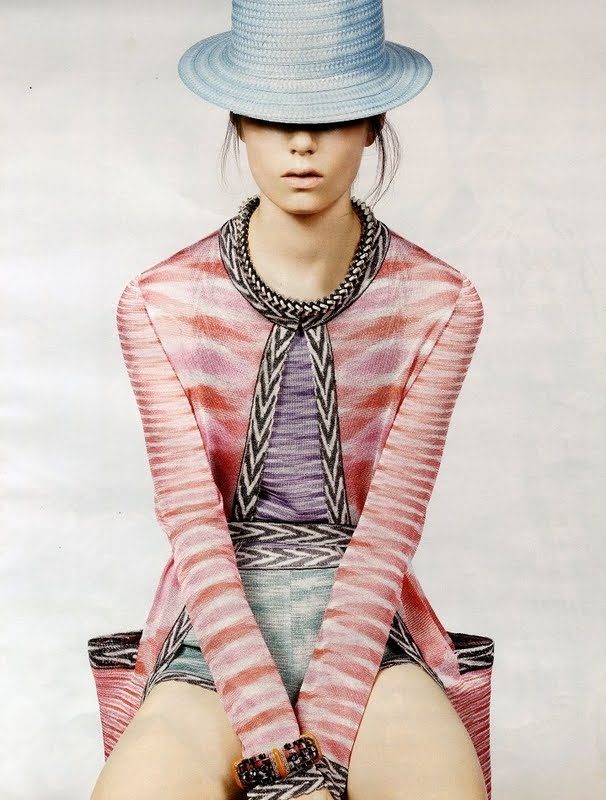
Whether you’re already signed, or about to break into the industry, a head of hair that’s in poor condition can be a deal-breaker. But a great head of hair, regardless of whether it’s long, short, straight or curly, can be a phenomenal asset. Just ask cover girl and rising star, Hailey Clauson [pictured]. It doesn’t matter if your skin and body are in great shape – if your hair’s letting you down, that’s the first thing people see, and in an industry where first impressions count, giving yourself the best chance possible means covering all your bases.

Think of all the hair care brands available on the high street at the moment: not just shampoo and conditioner, but the masses of styling products. Then factor in the professional brands you see at the salon – that’s a huge number of potential clients, and hair is very big business. If you want a piece of the action, getting your own hair in check is a must.

The first step to achieving good hair is the shampoo. This may seem like the one part you’ve got handled, but like skincare, the first and most important step is cleansing without stripping the skin of its natural balance – your scalp needs just the same level of attention.

Run your hands through your hair – does it feel healthy and well conditioned, or a bit oily at the roots – do the ends of your hair feel brittle and unloved? The state of your hair will tell you a great deal about what is really needs. Just like skin, if you’re doing something wrong, your hair will tell you in no uncertain terms!

If your hair leans towards oily, buy a good-quality clarifying shampoo. One that’s gentle is essential, because any formulation that’s too harsh will dry out your scalp, causing the oil glands beneath to go into overdrive in replacing what’s been lost – definitely not what you want. Ignore the old wives’ tale about hair not really being clean until it ‘squeaks’. Unless your hair’s been taking a hammering from overuse of styling products, one shampoo should be enough.

If you regularly colour your hair, protect your investment with a colour-specific shampoo. They can cost a little extra, but looking after your shade means it will last longer – great if you’re watching the pennies.

For hair that just feels normal, in good condition and well balanced, a decent cleansing shampoo will be perfect. The key to shampoo is to get one that matches not only your hair type, but your lifestyle. It’s a good idea to have more than one type of shampoo on the bathroom shelf. If your hair is coloured, it will suffer from occasional dryness especially in bad weather, so a good hydrating shampoo will be an excellent addition to a colour-protecting one. If you’re a regular user of product – and as a model, your hair will take some battering - find the best quality deep-cleansing shampoo you can get your hands on. Use this once a week (more if you need to), and your hair will be ready to take on anything that’s thrown at it.

The second step of hair care, still obvious, but still important, is conditioner. Some people think this step is optional, but if you want your hair to be your crowning glory, conditioning is a must.
Again, match your conditioner to your hair’s needs. If you have very oily roots, you may have shied away from using conditioner in the past, assuming it would leave your hair greasy and flat. The key to getting round this is to use a leave-in conditioner. The ultra lightweight formulas now available will transform the way your hair looks and feels. Just spritz it on after showering, and your hair won’t be weighed down or greasy, just beautifully conditioned.

If your hair leans towards the other end of the spectrum, a good moisturising shampoo will be worth its weight in gold. If you’re experiencing extra dryness due to the weather / stress / illness, leave the conditioner in for an extra couple of minutes while you’re still in the bathroom – the steam will encourage the conditioner to really get to work on those pesky dry ends.

If you want to go the extra mile, giving your hair a weekly treatment is a great idea. A good hair mask will restore shine and condition in no time – two things a camera will definitely pick up on. Tailor the treatment to yourself: you don’t have to use the product all over, just where it’s needed. However, if you’re using a colour-protect mask, use it from root to tip. It will conserve your colour and stop it fading prematurely.

Slotting a weekly treatment into your routine is also an excellent idea of you’ve been hitting the straighteners. Great for getting that sleek look that’s finally returned to the runways, regular use of straighteners (even the good ones) are notorious for leaving the hair weak and out of condition. The high temperatures involved means that your hair’s being subjected to some seriously intense wear and tear. Prepping your hair with a heat-protector spray or styling lotion will shield it from some of the potential damage, but the bottom line is if you’re a fan of this look, take time out to give some TLC back to your hair – it’s worth it.

Styling products are fast becoming an industry in themselves. Gel, mousse and hairspray used to be the basics, but now you can found dozens of hybrid products out there for every conceivable styling emergency. Whatever you go for, there’s one cardinal rule when it comes to styling. Use less, achieve more. These products are designed to act quickly and decisively. You know instantly when you’ve applied too much product – your scalp feels overloaded, your hair loses volume – it’s not a good look.

Whenever applying product, especially if you’re using a brand you’re not used to, go easy on the amount you use. It’s the same principle as applying blusher – you can always add more if you need to, but trying to correct a face covered in fuschia is easier said than done. A further note about castings – resist the temptation to try a bold new look to wow clients and casting directors. There is always the chance that something could go horribly wrong and you’re left with a head of lank, overstyled hair, and no time to fix it. Nothing ruins confidence faster than a bad hair day. If you regularly style your hair, on casting days go with what works. You won’t be worrying about what your hair’s doing, and you can concentrate on getting that booking.

The forgotten aspect of hair care is shaving. Whether you’re a guy having to keep that clean-cut look fresh day after day, or a girl opting for the blade rather than waxing, life’s too short to spend it at the shaving mirror. Knowing a few tricks can make the whole business quicker and more efficient.

The first step is to work on a clean surface. If you do have a few extra minutes, gently exfoliate the skin before shaving. It will not only remove dead skin cells and promote fresh cells to the surface, but it will lift the bristles up from the surface of the skin, making them an easier catch for the blade. Failing this, a brilliant time-saver is to get a wash-cloth, soak it in warm water, and then press it onto the skin and leave it there for a couple of seconds. The warmth will open your pores, and the bristles again will lift up from the skin, making shaving easier and more comfortable. The hair will be less resistant, meaning you don’t have to drag the blade over your skin, resulting in red, bumpy, irritation.

Another trick to avoid the dreaded razor rash is to ignore everything you’ve seen in the adverts. Those long, sweeping strokes up the neck and across the chin? Forget about it. When you’re shaving, use short strokes. You don’t want your blade to become overwhelmed. If the razor’s clogged up with shaving foam and hair, it’s not going to be able to give you the results you want. This technique results in a closer shave and re-growth won’t show up as quickly.

Finally, a note about product. The classic move is to slap on some aftershave after shaving, but you will know already that this hurts like hell. Your skin post-shave will be feeling sensitive and it needs a little extra help to see it through the day. Invest in a good aftershave balm – it will soothe your skin and treat any irritation. After that has had time to get to work, apply your usual moisturiser – it may seem unnecessary after using the balm, but your skin will thank you for it. When using aftershave, dab a little onto pulse points. The scent will intensify with the heat of your skin and is a subtle, sophisticated way to wear fragrance. Especially when going out to castings and meeting new people go easy on the scent – good grooming speaks for itself.

Part of the business of being a model is that people will have an opinion on every aspect of your appearance. Every inch of your image will be dissected: what works, what could be improved, and what needs to go. Try not to take any criticism personally – think long-term: will this look help my career get to the next stage? Some agencies will absorb the cost of a ‘makeover’ as part of their investment in you, but if you want to make an image change off your own back, talk it through with your agency first.

It sounds ridiculous, but even a simple haircut could have serious consequences. If you have long hair, go in for a cut that takes 6 inches off the length, and your agency (not knowing this) has submitted you for a go-see on the basis of you having long hair – disaster. The wrong cut could end up with you losing out on work. So in short, anything more drastic than a trim needs to be okayed with your agency first!

Of course, a great cut can make all the difference – model Freja Beha saw her career sky-rocket after her long hair got transformed into a wavy, mid-length bob. The key to any transformation is whether it will make you a better model – will a colour change make you more versatile, will going short give you the edge over your competitors? If you’re currently unsigned, think very carefully before making any big changes. Don’t just consider whether a haircut will physically suit you, but whether it will be a good fit for your future career. If your modelling strength is your classic bone structure and feminine features, getting a severe crop may not be the best way forward.

When you’re at the early stage of your modelling career, hair is probably the most important aspect of your appearance. A good head of hair can sway an agency to sign you, even if your skin’s having a bad day. A career-making haircut can be shorthand for the model you want to be, and get you there that much quicker. You may think success in modelling is all about giving good face, but if your hair’s not part of the team, it can throw off your whole look. Get your hair fabulous, and give your career a fighting chance.

HELEN TOPE

Saturday, 26 February 2011

MODEL PROFILES: ANNA DE RIJK

Born in the Netherlands in 1988, Anna de Rijk was first discovered at age 16 by a photographer who was attending her neighbour’s Xmas party.

Shooting her first international editorial in June 2006, Anna scored her first cover in October with Dutch Elle. Making her runway debut in October 2007 for Vivienne Westwood and Veronique Branquinho, Anna’s career was very much on a job-by-job basis. Working for two years, but somewhat under the radar, Anna’s initiation into full-time modelling didn’t start until February 2009 when she walked for Blumarine, Christopher Kane, Dries Van Noten, Lanvin, Louis Vuitton and Prada. Just a month after her comeback, after being in modelling for three years, www.style.com pegged Anna as a rising star.

In July, Anna booked slots in the couture shows for Chanel and Valentino – an unusual honour as Anna at 5’ 9”, is at least two inches shorter than most couture models. Her summer was peppered with editorial work for Dazed & Confused and British Vogue, but in the latter part of the season, Anna was announced as one of the faces of the new Autumn / Winter Prada campaign.

It is the sort of casting that dreams are made of. An appearance in a Prada campaign is nothing short of a career-maker. The eccentric ad, featuring the models in woollen separates and rubber boots, was an iconic piece of Prada whimsy. Miuccia Prada doesn’t do femininity head-on, but always from an angle. The saucepot librarian is in heavy tweeds to off-set the va-va-voom; the half-clad Amazon in snakeskin and 6” heels is channelling evolution rather than seduction. There is always present in Prada an element of the unexpected and that’s why it’s the most famous five-letter word in the fashion world today. Any model even remotely associated with the brand, let alone featuring as one of the campaign girls, can look forward to a career spent working with the best creative talent fashion has to offer.

Anna’s next booking after the Prada announcement was for a multi-model haute couture editorial for Italian Vogue. Photographed by Paolo Roversi, ‘Dream of a Dress’ is a roll-call of all the best and brightest modelling talent. Using the latest designs from Paris, it was a gothic, glamorous masterpiece that showed Anna and her peers exploring couture’s dark side. Anna’s reversal of fortune continued with a 45 show season in September and October, opening the show for Burberry and walking for Prada, Chanel, Givenchy, Lanvin, Erdem and Thakoon. Her meteoric rise from fashion girl to face to watch may have been dizzying, but Anna’s performances were grounded by the knowledge and experience gained by working beyond the glare of the spotlight, before her re-emergence in 2009.

2010 was an even better year for Anna, with the model scoring big in January when she was asked to appear in an editorial for Italian Vogue, dubbed ‘Runway’, and shot by Steven Meisel. In what turned out to be a vastly important piece of editorial work, Meisel used every model of note to compile a series of carefully-constructed shots made to look like behind-the-scenes candid snaps from runway shows. Mixed with standard editorial shots (plus a cover of Karlie Kloss about to take a tumble in platform heels), it was a brilliantly self-referential take on high-fashion, and a phenomenal way to kick off a new decade.

Anna took on a challenge in February when she featured in a spread for French Vogue. Called ‘Vogue a Porter’, it paid homage to the controversial 1974 film ‘The Night Porter’. Anna got to take on the topless shot made famous by Charlotte Rampling. A notoriously difficult kind of shoot to get right, it earned Anna major kudos. Turning her classically feminine looks into something altogether more ominous, Anna was the epitome of French Vogue’s point of view: subversive, clever and irretrievably stylish.

The year continued to be lucky for Anna, signing on to become the face of Dior jewellery, and a contract with Chanel cosmetics. The latter booking was particularly important for Anna as it would turn her from a high-fashion favourite to a recognisable presence in beauty halls across America and Europe. Like Prada, Chanel is a label whose image and name go hand in hand, and the fame of Chanel’s make-up is almost on a par with its clothes. The pillar-box red lipstick and the Rouge Noir nail polish are as solid pieces of Chanel iconography as the tweed suit itself. Anna’s face was perfect for the classic beauty with a trend twist that’s needed for Chanel. Again, as with French Vogue earlier in the year, Anna was able to morph seamlessly into that mould. But look closer at the images produced and there is a haunted quality there that takes the Chanel ad to another level: it’s not just about lipstick, but about an entire sensibility.

Bringing an element of individuality is what separates a high-fashion campaign from a more commercial one. The fuss-free look for the H&M campaigns has become synonymous with the brand, but at no stage do these images feel cheap. Freja Beha’s S/S 2011 campaign for H&M is perfectly on-message for the label, but Freja’s personality jumps off the page and that’s what keeps us looking. Great campaigns work because they linger in the mind - and that’s exactly the point.

The remainder of Anna’s year was made up of runway and editorial, plus a new campaign for Sonia Rykiel with up-and-coming model Katie Fogarty. But it ended with another major signing, this time with American icon Vera Wang.

Modelling both her fashion line and bridal wear, Anna became the face of the brand that has changed the way we think of dressing for that ultimate fashion moment. Launched in the Nineties, Vera’s aesthetic rejected Eighties excess in favour of a calmer, more refined look. Anna was a perfect pick to represent the label – she created a look that was soft and yielding but with a high-fashion edge that was aspirational rather than something designed to intimidate. This is especially important when modelling bridal wear, as it has to connect with the customer on a very real level: creating that fantasy image is all well and good, but if the customers can’t imagine themselves wearing that dress, the campaign has failed. Anna made the perfect connection, making the label look desirable but feel attainable – an important distinction.

2011 promises to be off to another good start for Anna, with an early appearance in American Vogue. Shot by Mario Testino, it is an epic multi-page editorial featuring all the trends from the Spring / Summer 2011 runway. Called ‘Gangs of New York’, models were put into groups. Anna was paired off with Frida Gustavsson and Jac. All three were photographed in vintage lace Ralph Lauren. Referencing the more romantic side of the Wild West, the picture is dubbed by Vogue as ‘The New Romantics’. The photo is soft-focus and other-worldly, but at its core, Frida, Jac and Anna are clearly three women not to be trifled with.

It’s a perfect metaphor for Anna’s career to date. Her gentleness on camera belies an inner strength – you can’t reference films like ‘The Night Porter’ or work for designers such as Givenchy or Prada without being able to take a walk on the wild side. Her speciality may be the soft, feminine aspect of high-fashion, her work with Vera Wang being a particularly good example of this, but it is Anna’s willingness to dig deeper and go further that sets her apart from the competition.

Her ability to work with the most cerebral designers and translate their vision, whether it is on camera or on the runway, is all down to the slow-burn part of her career. Having to wait it out for nearly two years would test even the most determined model, but Anna stepped back into the limelight ready to wow us, and she did. Anna’s career will continue to offer up surprises and delights because she recognises the importance of challenge: challenging your industry and your peers, but most importantly, yourself.

HELEN TOPE

Sunday, 13 February 2011

MODEL PROFILES: KARMEN PEDARU

Born May 10th 1990, Karmen Pedaru’s career is testament to how paying your dues can really pay off.

Discovered in 2005 at a drama theatre in Tallinn, the Estonian-born model signed with NEXT Models the following year. Appearing for Teen Vogue in June 2006, Karmen debuted at Fashion Week that September, walking for Christopher Kane, Marni and Emporio Armani.

Skipping the February 2007 season, Pedaru returned to the runway in September 2007 opening the shows for Louise Gray and Biba. Also walking for Collette Dinnigan, Louis Vuitton and Stella McCartney, Karmen’s stock was on the rise.

In February 2008, Karmen’s growing confidence on the runway was rewarded with a stellar season, appearing for Donna Karan and Marc Jacobs in New York, in addition to being picked to open shows for Dries van Noten and YSL in Paris.

Her breakout season was noted by the fashion press, with both www.models.com and www.style.com dubbing Karmen a top newcomer. Karmen’s success on the runway translated into credible editorial work, with a spread in Numero photographed by Greg Kadel, and a layout for V, shot by Mario Testino.

In July, Karmen made her debut on the couture catwalks, walking for Chanel, Givenchy, Valentino and Dior. Getting to model couture is an integral part of building that envy-inducing CV. The requirements for haute couture are very specific, but once you’re in, you’re in. The ‘look’ of a couture label tends to be more fixed than its ready-to-wear counterpart. Couture forms the ‘essence’ of the brand, so some elements stay in place for nearly every collection, such as white for Chanel, and red for Valentino. Therefore the faces that wear these looks don’t have to be hired and dropped in such quick rotation. Couture doesn’t just build relationships with its clients; it builds lasting links with its models too. American model Karlie Kloss has been the face of Dior for the past two years because she is one of Galliano’s couture favourites. This has led to Karlie becoming one of the most in-demand models working today. Couture is very much a niche market: corner it, and the search for work becomes that little bit easier.

Karmen experienced this domino effect for herself in September 2008 when she was photographed for Numero magazine by Karl Lagerfeld, just a few months after her debut on the catwalk for Chanel Couture.

The couture connection continued with a shoot for Italian Vogue. Karmen, photographed by Miles Aldridge, appeared in Valentino Couture. A deceptively simple shoot, the heavily-worked couture demanded a focussed performance. It would be a tough ask for a more established model, but Karmen’s quietly assured performance showed the industry she was ready to take on more.

Her ready-to-wear season in September was another triumph, with opening show honours from DKNY, Jonathan Saunders and Rue du Mail. Closing the show for Nicole Farhi and Temperley in London, Pedaru also walked for Alberta Ferretti, Calvin Klein, Chanel, Isabel Marant, Proenza Schouler and Roberto Cavalli – a truly eclectic mix of blue-chip and cutting-edge labels that have come to form the basis of Pedaru’s career.

In early 2009 she was announced as the face of Missoni’s diffusion label and was photographed for the D&G spring campaign by Mario Testino. Following another couture season in January, it was announced that Karmen would become the first model to represent the Derek Lam label in a campaign, to be shot by Solve Sundsbo.

Pedaru walked again in the Autumn / Winter couture season in July, adding Armani Prive to her list of credits. Ending the year with a blockbuster RTW season, and the Autumn / Winter cover of French Revue de Modes, 2010 would manage to eclipse the extraordinary run of success Karmen found in 2009.

In February’s A/W 2010 season, Pedaru signed up for an incredible 55 shows. She opened shows for Tommy Hilfiger, Alberta Ferretti, Dries van Noten and Burberry. Karmen’s placing as the opener (and closer) of the Burberry show would prove to be a pivotal moment in her career. Christopher Bailey’s take on aviator chic proved to be the defining image of the season. Karmen’s photo cropped up time and again in the press, and as the season gathered accolades as one of the best for a decade, Pedaru’s photo became one of the important fashion images of the year.

Karmen’s profile unsurprisingly went through the roof, with editorials for French and Italian Vogue in April; the cover of Japanese Numero in June and the announcement in late summer that Pedaru would become the face of Emporio Armani and Salvatore Ferragamo.

Topping the year off with another 55 show season in September, Karmen got a chance to show what she’d learned in the past 12 months with an editorial for French Vogue called ‘Bal Masque’.
Featuring alongside Anja Rubik and Dree Hemingway, the themes were sensuality, opulence and Parisian glamour. Each concept is tricky enough in itself, but a sultry shoot is a notoriously difficult balance to strike. There’s an absolute (but subtle) line between making a statement and edging over into lads’ mag territory. The almost-mathematical precision in getting it right without sacrificing the mood of the editorial requires a level of skill you can only acquire through experience. The shoot worked perfectly in keeping the pages of French Vogue strictly high-fashion.

Karmen’s career zig-zagged again with another campaign signing, but this time she was asked to appear for the autumn / winter collection for Gap. The quintessentially American label chose to focus on one of its best selling points: denim.

Gap’s series of adverts marketed different cuts of jeans (eg: straight, modern flare, skinny) and used a clutch of top models to sell the goods. The campaign’s emphasis on easy fashion, added a stroke of genius when Gap put names to the model faces which included Alana Zimmer, Anja Rubik, Catherine McNeill and Lily Donaldson. Putting their names to each campaign image made the models immediately more appealing, taking it beyond the usual pairing of model with product, creating a campaign that was a slam-dunk for the iconic brand.

Gap’s light bulb moment worked because there is a certain satisfaction in being able to put a name to a face. The Cindys, Naomis and Christys – the models of the Eighties who were more celebrity than mannequin – are a thing of the past. It’s still possible for models acquire a certain level of fame (Lara Stone for example), but for most models, the trade-off is being known on sight, but not by name. In an age where we know everything about celebrities from their shoe size to their favourite snack, it’s a curious state of affairs.

But this is set to change as our interest in fashion continues to grow. Ten years ago, finding a member of the public who could name the editor of French Vogue would have been a tall order. Ten years on, Carine Roitfeld’s dramatic departure from the magazine in 2010 made headlines across the world.

The models emerging today are working in an industry where the rules are now a work in progress. A large part of that change has been thanks to the internet. Access to fashion – the very latest news, editorials and shows – is now just a click away. This proximity has created a generation who are as familiar with Gareth Pugh and Christopher Kane as they are with Topshop and Primark. It’s a generation who feel comfortable enough with the world of high-fashion to dissect the latest ideas, both with each other and the world at large. This willingness to engage in all things sartorial has turned the industry into something to be actively enjoyed, rather than regarded at a distance.

There are of course misgivings; when every opinion gets equal billing, figuring out what’s really worth your time can be difficult. But ultimately having too much information forces you to be selective. Being able to access everything gives you an immediate idea of what you like, what you don’t, and more importantly, why.

Making fashion a friendlier place to be has proved to be a touch of brilliance, because fashion is all about forming relationships. At the heart of this is the link between us, the consumer, and the model. If we don’t identify with the model, that dress, or that bag, won’t sell. The job of the model is to embody a designer’s ‘big idea’, whether that’s old-school sophistication or avant-garde sleekness, but in getting fashion’s finances back on track, the secret is to be relatable. The day of the uber-groomed supers has gone for a reason; we all want to indulge in that element of fantasy, but the post-recession fantasy is about the business of joy, not exclusion. Fashion’s getting back to the basics of why we buy what we buy: not just to feel part of a ‘club’, but to enjoy the act of choosing and wearing great clothes.

In light of this, the obvious choice would be to hire the money-maker faces. But the faces that are rising to the top aren’t just those starry one-in-a-million faces, but models that have got there through sheer hard work.

Karmen’s rise from ingĂ©nue to campaign girl is textbook when it comes to making the move from model to super; some are faces ‘of the moment’, slotting into a mood or look that gets everyone talking. Others make it by stealth, working for years and then suddenly making it big – Iselin Steiro is a perfect example of this. But Karmen falls into the third group: a solid but steady start, which blossoms into regular work on the world’s runway and editorial circuits.

Karmen’s transition from runway regular to the Spring 2011 face of Michael Kors and Gucci has been a process several years in the making, but Pedaru’s star power has lost none of its potency for it. There are some models that just have ‘it’ – that elusive modelling gene – but there’s something to be said for the grafters of the industry.

Karmen’s career will continue to flourish because her years of hard work have given her the skills of a supermodel, with the insight and intelligence needed to interpret fashion for a whole new generation.

HELEN TOPE

Sunday, 30 January 2011

MODEL GROOMING: SKINCARE


In modelling, your skin can be your greatest asset. A great skin not only makes you eminently bookable when it comes to castings, but it can transform your career prospects. A skin that can handle the most demanding close-ups will always be needed by every facet of the industry, from fitness to commercial and high-fashion. Selling a product successfully often requires that one-to-one connection with the consumer and a model with a naturally glowing, healthy skin will appeal across the board.

Even with hi-tech solutions like airbrushing and post-production enhancements, the chief responsibility of the model is to be that perfect blank canvas. If you are a newer or less established model, don’t expect the post-production team to have your back – these tricks of the trade are often highly expensive and clients can be reluctant to shell out extra money on getting a model’s skin up to code. Minor blemishes can be erased with a click of the mouse, but long-term maintenance lies ultimately with the model.

Most people only think of good skin in terms of having a blemish-free appearance, but there are really 3 components for photo-ready skin: clarity, radiance and hydration. A skin that is well-balanced and hydrated will have that sought-after, lit-from-within glow. Likewise, a beautifully hydrated skin will have very low levels of toxins lurking in its pores, so will have a very low hit-rate when it comes to blemishes.

These 3 components rely on each other to get the best possible results, but what’s reassuring is that having a ‘good’ or ‘bad’ skin is not hereditary: you’re not stuck with a skin that could be better. There are things you can do yourself that will make a visible difference. The golden rule in getting good skin is to keep it simple.

The first trick has become a bit of a modelling clichĂ©, but it’s stuck around because it works. Drinking lots of water really does help. If you suffer from occasional breakouts or patches of dry skin, water can do a terrific job in flushing out toxins that can cause problems and help soothe and regulate your skin. The occasional blemish is forgivable even in the modelling world, but a skin that flares up and changes from day to day can become a more serious issue.

Sensitivity, whether it’s a reaction or a breakout, should be treated the same way. A sensitive skin is treated gently with specialised products, and treating spot-prone skin should ideally be tackled by the same approach. If you do get breakouts that are more regular than occasional, it’s time to bring in the experts.

Resist the temptation to blast your skin into submission with harsh, chemical-laden products. These products may help in the short-term, but their ingredients have a tendency to strip the skin of its natural oils. An oil-free skin sounds like a good thing, but what then happens is your glands work overtime to replace the oil that has been lost and you end up with even more spots. Definitely not a good thing!

You can break this circle by going to professional products. If you know you have a skin that breaks out regularly, spending a little extra on salon-tested brands that specialise in treating in skin problems is worth the expense. Dermalogica, Alpha-H and Elemis are just a few examples. A good-quality product can make all the difference, and what you will notice about the pricier brands over those from a high-street chemist, is that their ranges for blemished skin concentrate on soothing the symptoms to create a skin that’s balanced, not stripped.

If your skin is not your red-button issue, a basic regime will work well for you. A decent cleanser is essential – studio make-up tends to be heavier than normal formulations, and getting off every scrap at the end of the day is essential. Find a cleanser targeted to your skin type, but a mild rinse-off gel cleanser is a good purchase for any skin. Also keep an eye out for professional make-up brands, such as MAC and Shu Uemura, as they have their own ranges of cleanser especially designed for removing make-up.

Spending big bucks on a moisturiser isn’t necessary: a mid-priced hydrating moisturiser with an SPF is more than adequate. If you’re drinking enough water throughout the day, your skin shouldn’t need that much help in the hydration department.

Another skincare must-have is a face scrub. Good for promoting fresh, young skin cells to the surface, regular use of a scrub prevents your skin from getting that grey, lived-in look – particularly handy if you’ve been working (or playing) too hard.

Pick a scrub that’s suitable for your skin type, but whatever you do, don’t work the product in too hard. Let the scrub do the work, and gently massage it onto a wet skin. It may seem like an optional extra, but a scrub can make a surprising difference when it comes to that most coveted of model attributes: luminosity.

If you want to take your skincare up a notch, you can also look into using a face mask. Ideal to use on a newly-scrubbed face, there is a mask out there for every skincare concern. If you’re using a mask designed to draw out impurities, don’t use it just before a shoot. The mask’s job is to pull toxins to the surface and you may end up with some very badly-timed blemishes. If possible, use this type of mask two or three times a month as a ‘deep-cleanse’ treatment. If your skin’s getting exposed to harsh studio lighting and long hours – a mask that revives tired skin is perfect. If dryness is your problem, a lightly moisturising mask is always a good standby.
The key to using products intelligently is to assess your skin to see what it really needs. If its feeling (and looking) sensitised, treat accordingly, and it’s worth bearing in mind that your skin’s needs can change from week to week, season to season. Don’t get stuck into thinking that you have one specific skin type all year round: your skin reacts to its environment. Adapt your routine to what’s happening in your life and watch your complexion flourish.

The investment in products may seem like an unnecessary expense, but the lot of a working model is such that spending on grooming is an unavoidable expenditure, and definitely something to be factored into earnings. Think of it this way: if your skin’s in peak condition, your earning potential is maximised too. Suddenly shelling out for a tube of moisturiser doesn’t sound so bad.

The final note about skincare is an obvious one, but does need stating. If you smoke, expect the success of these products to be limited. Your skin cells will be starved of oxygen, and will affect the way your skin looks both in person and on camera. A smoker’s skin tends to be easily recognisable by its grey-ish tinge: no matter how dedicated you may be to a skincare routine, even drinking plenty of water and eating well, nothing will do your skin a bigger favour than cutting out (or even cutting down) on cigarettes.

If that doesn’t sell you on whipping out the nicotine patches, think about where you want your career to be in 5 years’ time. If you smoke heavily, prepare for your modelling career to be cut short. The physical action of smoking creates tension lines around your eyes and mouth, which will rapidly turn into permanent lines because your skin’s support system won’t be up to the job of battling premature ageing.

If you plan to be in modelling for a few years, not smoking may be a sacrifice worth making. Your skin is an instant tell-all. It reveals everything you’re doing right in terms of health, and exposes anything that could stand to be improved. A lack of sleep, a dip in nutrition all show up on your face, and if your face is your fortune, that’s bad news.

The good news however is that skin responds quickly to changes, and a good diet (most of the time!), plenty of sleep and a smoke-free environment can make a huge difference to the way you look – not to mention the way you feel.

Think of skincare as being holistic: an inclusive approach will make for the best results. Taking care of yourself doesn’t require that much effort if done regularly and the pay-offs in modelling can be phenomenal.
HELEN TOPE

Sunday, 23 January 2011

MODEL PROFILES: PATRICIA VAN DER VLIET

Dutch-born Patricia van der Vliet is one of the success stories that can be attributed to the Top Model phenomenon.

Born on July 14th 1989, Patricia became a contestant in the 2008 edition of Holland’s Next Top Model. Although she did not go on to win the competition, Patricia’s modelling career went live when she signed with NY Models the following year.
In September 2009, she debuted at Fashion Week. Patricia made the headlines, walking exclusively for Prada in Milan and closing shows for Preen, Giles and Balenciaga.

In a move similar to fellow Top Model alumnus Alice Burdeu, Patricia took instantly to high-fashion and the feeling was more than mutual. Also hired to walk in Spring / Summer shows for Celine, Dries Van Noten, Louis Vuitton, Nina Ricci and Valentino, Patricia was a hit with every major designer. If there was ever a career defined by its beginning, this was it: Patricia’s start in the industry was loaded with star-making potential. The impact of her debut was sealed when www.style.com named her a Top 10 Newcomer.

2010 saw Patricia explore other avenues of modelling, including editorial and campaign work. Early in the year, news broke of Patricia being signed to appear in the S/S ad for Balenciaga, along with Mirte Maas, Iselin Steiro and Lisanne de Jong. All faces of the moment, they were a perfect choice for the avant-garde label.

True to form, Balenciaga hired photographer Steven Meisel to create a series of eye-catching, ultra-daring ads. The end result was ground-breaking and immediate in its impact. Zesty bursts of colour, go-faster stripes and a play on proportion that bordered on the surreal all made for a highly unusual but memorable campaign. An absolute stand-out, and one of the high points of last year, the Balenciaga ads were a creative tour de force. For a fledgling model, being involved in such a project was nothing short of a career-making moment.

Patricia’s year continued on a high, with an Italian Vogue editorial in January and her first appearance at couture fashion week in the same month. February saw Patricia appear in simultaneous layouts for Numero, Interview and British and Chinese Vogue. She also had her biggest runway season to date, walking in over 50 shows. Opening the Giambattista Valli show and being the closer for Balenciaga, Patricia walked for every designer from Oscar de la Renta to Gareth Pugh.

What followed was an extraordinary run of editorial work, ensuring Patricia’s career was international in scope. In March, she featured in American and British Vogue; Japanese Vogue in April; editorials for W and American Vogue in May, Japanese Vogue again in June followed by a spread in Russian Vogue in September. Appearing for the taste-makers of high-fashion, Patricia’s initial buzz as a model to watch had translated into global appeal.

Her developing career blossomed further in September with a runway season that had its roots in high-fashion, but began to develop strands into other lucrative pockets of the industry. Walking for Alexander McQueen, Chanel, Dolce & Gabbana, Givenchy, Rodarte and YSL, Patricia also landed spots with Prabal Gurung, and all-American labels Tommy Hilfiger and Reed Krakoff. Every design house has its own unique style imprint, and being able to interpret any style from the Parisian theatrical glamour of McQueen to the fresh look at American chic from Reed Krakoff, puts you at a distinct advantage.

Patricia rounded out the year with a second editorial for Italian Vogue and her first major cover, starring alongside Karlie Kloss on the November edition of Chinese Vogue.

Patricia’s link with the McQueen label continued in January 2011, with a pivotal role in an editorial for American Vogue. Featuring work from new creative director Sarah Burton, this was an in-depth look at the legacy of McQueen.

Named ‘New Order’, Patricia modelled with Sasha Pivovarova, Lily Donaldson, Caroline Trentini and Mirte Maas in a poignant spread featuring the new collection, just seen on the runways a few months before. With Patricia in the absolute centre of the shot photographed by Patricia Demarchelier, it was an editorial heavy with meaning; new designer, new year, and new start. These photographs were a tribute to, and signal from, the McQueen label: fashion may look back, but eventually it moves forward.

Patricia’s first shoot of the year couldn’t be more aptly named if it tried. The tough times of the past two years required more than a bi-seasonal change of trends, but what fashion gave was a tour-de-force performance in creating a ‘new order’. The fashion world undertook a radical image overhaul, and transformed itself into a wiser, wittier industry that’s now teeming with ideas.

Right now, fashion’s biggest idea is individuality. The models making it big are defiantly different from the glamorous Slavic models and the eclectic band of all-American girls seen operating during the past decade. The new look is recognisably supermodel, but without the formula behind it. The latest newcomers (including names such as Lindsey Wixson, Joan Smalls, Daphne Groeneveld and Caroline Brasch Nielsen) all have one thing in common: they defy category. Not easily definable, even harder to summarise, but that is exactly the point. The once iron-clad terms the modelling industry lived by - editorial, high-glamour, androgynous - are starting to lose their grip. The newest models are at once all of these things and yet none of them either and that’s what makes them a breath of fresh air.

This has been fashion’s response to the recession: regroup and rebuild. Despite the gloomy predictions in 2008; both high-fashion and haute couture are still standing proud. But the uncertainty that continues is what makes this current climate so great for fostering creativity. It’s no coincidence that these past few seasons have produced hit after hit. This winter saw a return to neutrals after years of glitz reigning supreme; and this summer, fashion’s done another 180 with an explosion of colour and print that’s exuberantly optimistic. We’re finally starting to see fashion with the blinkers off. It’s not about sartorial point-scoring, but a genuine appreciation for fine clothes and great design. This is what is so compelling about fashion – its ability to create the next big idea that everyone’s got to have. This time, fashion's big idea is fashion itself.

But fashion’s most brazen about-turn has been to revise the faces it chooses to represent its brands. Models like Patricia are booking covers and campaigns because they are reassuringly different, rather than despite of it. Modelling has always celebrated uniqueness, whether it’s through models like Devon Aoki or Alek Wek, or more recently, Jamie Bochert or Saskia de Brauw. But the shift that has happened is going from one or two models flying the flag for individuality, to a whole industry of models who defy definition. It’s a brave step, but one that finally feels right.

As models like Patricia take their place among fashion’s elite, the way we see fashion – and the way it sees itself – will continue to evolve. If there’s just one message to take forward into the next decade, it’s simply this: the best is yet to come.

HELEN TOPE

Sunday, 9 January 2011

MODEL PROFILES: SIRI TOLLEROD


Born on the 18th of August 1988, Norwegian Siri Tollerod has translated global runway success into a career set to explode in 2011.

Siri was discovered at a shopping mall in 2007 and appeared in her first major editorial in June the same year. The client was Italian Vogue. Her high-flying start progressed into substantial campaign work, with Siri representing both DKNY and Prada Sport.

September’s runway season was Tollerod’s ultimate test: a model with hype is not a new phenomenon, the fashion industry is a tough crowd to please and reputations aren’t made until a model’s successfully negotiated Fashion Week. If a model can impress on the catwalk, she moves from being just one in a sea of new faces and becomes a bookable name. Getting signed by an agency often isn’t the toughest challenge for a model; it’s proving your worth as someone who can compete on a level with models who already have years of experience behind them.

Only a few months into her career, Siri’s first international season proved a triumph. Booking spots with Alexander McQueen, Balenciaga, Chloe, Marc Jacobs and Prada, she also opened and closed the D&G show and was the closing model for Lanvin. Appearing on runways in New York, Paris and Milan, Siri was a hit in any language.

Tollerod rounded out the year with editorials for British and Italian Vogue and a Chanel Couture spread for Numero. But Siri’s blockbuster season kept her fresh in the minds of the industry, and in early 2008, Tollerod appeared in Prada’s resort look-book.

Effectively a high-fashion catalogue for buyers and stylists, getting hired for a look-book is on a par with getting a campaign. Siri’s initiation in the world of high-fashion was completed in January when she walked in the couture season. Her slight frame was perfect for haute couture and she walked for Givenchy, Chanel and Valentino, at a point where her career was still being counted in months, not years.

February saw Siri open RTW shows for Jason Wu and Chanel, in addition to walking for 60 other designers. She also landed the cover of Italian Vogue Beauty – a coveted spot famously difficult to get. A good face that can handle tight beauty shots is one thing, but Italian Vogue doesn’t ask for good, it demands excellence. Siri’s ability to meet the toughest client’s demands was furthered by her appearance in March’s edition of Numero. Featuring in an editorial photographed by Karl Lagerfeld, this really was modelling at the sharp end.

In April, Tollerod was featured in www.models.com for her ability to accrue booking after booking. As if to prove the point, she appeared in April’s Russian Vogue, and British, Italian and Chinese Vogue in May. Just a year into her modelling career, Siri was making her presence felt on an international level.

Autumn 2008 saw Tollerod reach even higher, with a campaign for Alberta Ferretti (shot by Steven Meisel) and three separate editorials in September’s edition of Italian Vogue. 2009 was a flurry of editorial and runway work, including a campaign for a new fragrance from Valentino, but Siri’s next career high-point came in early 2010 when she hired by Max Mara diffusion label, Sportmax, to be the face of their new campaign.

The distinctive, unusual images were super-styled, edgy and unique, standing out in a year where the natural look reigned supreme. The quirky look, featuring Siri with pale-skin and bleached-hair, was so successful that Sportmax repeated the winning formula with Ginta Lapina for Autumn. The key to its success wasn’t hard to fathom: the sophisticated approach made the clothes the focus, and it worked, bolstering the label both in terms of image and sales.
Tollerod’s year continued on a high, with a Spring / Summer couture season walking for Armani Prive, Chanel, Dior and Valentino and a feature in Japanese Vogue a month later, dubbing her a top model.

February 2010 saw Siri’s runway career soar once again, with over 50 appearances, including closing spots for Sportmax, Badgley Mischka and YSL. With editorial work for V Man, Allure, Numero and French Vogue, Siri’s career highlight was yet to come. In the autumn, it was announced that she would appear in the next Miu Miu advert alongside Lindsey Wixson.

Miu Miu has a strongly-defined look at its core, with a bold, avant-garde signature style that has made it a must-have label for a whole generation of fashion-savvy girls. Modelling labels with such a strong identity brings its own set of challenges, as there’s always the possibility of being overwhelmed by the clothes. It’s true that the clothes should be the ultimate point of focus, but the most successful campaigns happen when there is a balance struck between the model and the clothes: when both are on top-form, the result is hard to resist. Siri brought what she had learned from Sportmax, and the Miu Miu campaign was pitch-perfect: high-fashion that met aspiration with approachability.

The shot of publicity worked: Tollerod enjoyed another 50-show season in September, appearing for names such as Balmain, Fendi, Chanel, Lanvin, Jason Wu, Nina Ricci, Sportmax and Versace. Siri had finally become part of the fashion modelling elite, a presence in every major show of Spring / Summer 2011, including Marc Jacobs’ effusion of 70’s colour and Jason Wu’s multi-cultural epic.

Tollerod’s ability to carry a label, proved since her signing with Prada Sport in 2007, came full circle when in November she appeared as the only model for Lanvin’s range formulated for high-street giant, H&M. Like Miu Miu, Lanvin has a strong sartorial identity and it takes a skilful model not be outperformed by the look. Siri was visibly at home in the high-fashion designs, and Lanvin’s high-street version of their trademark crumpled dresses went on to become a bestseller.

Working at the heart of the industry since the very beginning of her career, Siri Tollerod has been steadily rising through the ranks, and is this year on the verge of becoming fashion’s next big thing. Recognised from the start, Tollerod’s strength has always been her tendency to multi-discipline. A regular feature of runway, editorial and campaign work, Siri has worked at being consistently good. Her signings with Lanvin and Miu Miu indicate her level of ability, not just to model, but to carry a brand.

What Siri does best is inhabit every look she’s given like it’s a second skin. The common theme running throughout Siri’s photographic work is that, no matter how high-fashion the concept, nothing looks forced. Tollerod wears every look as if she had chosen it herself. If there’s only one note to making it in modelling, it’s just to love everything. Having favourite looks and designers is human, but to make it your business to find the joy in a brand that is a total remove from your own personal style - that’s called being a model.

Versatility isn’t just about being able to handle looks from the romantic to the avant-garde. It’s about putting on the clothes and becoming that person, whether it is for a few minutes on a runway or a whole day whilst shooting an editorial spread. Siri’s career stands for what can be achieved when you model from the inside out. Her popularity for runway alone flags up how easily she can move from the soft, ethereal romance of Marchesa into the ultimate high-fashion experience that is Alexander McQueen.

Her campaign work ranges from an early signing with Prada Sport to her latest booking, modelling for Max Mara Elegante. It’s the modern definition of a fashion chameleon; a model that not only does it all, but convinces completely in every frame.

Where Tollerod’s career goes from here will be the most exciting part of her journey. The bar has already been raised this year with her solo appearance for Max Mara, taking on and representing a mega-brand as the main attraction, not a support act. In 2011, expect to see Tollerod become increasingly visible in an industry where it’s all too easy to blend in. A long-time stand out on the runway, Siri is about to get her moment in the spotlight, because finally it’s her time.

HELEN TOPE

Friday, 31 December 2010

CONTACTING AGENCIES

There are three main ways to contact a modelling agency:

- By post
- By email
- In person

Many model agencies specify which method they usually prefer, but note that when you’re starting out and shopping for agencies, cold-calling is a no-no. The odds of being signed to any agency are slim, but bugging an agency with calls isn’t the way to even out those odds. The key to getting seen is to play the hiring game by their rules. If the model agency you’re after prefers emails, send an email. If another agency holds Open Days, turn up on that day ready to dazzle. Persistence is a valuable asset when starting out in modelling, but use it intelligently and channel that determination.

The first step in contacting any model agency is to prepare some photos. This doesn’t mean spending hundreds, even thousands, on a portfolio. All you need at this stage are a couple of recently-taken photos, one head-shot (head and shoulders, facing the camera) and a full body shot (head-to-toe, again facing the camera). Some agencies also like a profile shot to see how your face copes with different angles - it’s worthwhile checking their websites as they will list exactly what they want.

The key to getting good photos is to keep it simple. Your background should be well-lit and uncluttered – standing up against a plain wall is perfect. In terms of posing, resist the temptation to show off your killer impression of Anna Jagodzinska: for these photos, try to keep your face in a neutral expression – this means no pouting or smiling. It’s harder than it looks and it might be worth practising in the mirror beforehand to know how your face settles naturally and what looks best.

Think of the process as a chance to present yourself as someone who could handle lots of different looks. With this in mind, think about what you wear whilst taking these shots. A simple t-shirt or vest with jeans is ideal: you’re looking to market yourself as that perfect blank canvas, ready to be signed.

In terms of grooming, simplicity is the key: over-working your skin and hair is a rookie mistake. A busy agent doesn’t want to have to spend time scrutinising a photo of someone who’s covered in make-up to see what’s underneath. Keep the skin clean and fresh – no make-up is preferable but a little dab of concealer here and there is fine. With hair, swept back off the face to show your bone structure works well, and it will also demonstrate how light hits your face. These photos are very important, and the temptation to hide behind a comfort blanket of make-up and hair product is immense, but any good agent will be able to tell if you have potential from a couple of simple shots. Once you are armed with a set of photos you are happy with, here’s how you go about approaching an agency.

By post

Contacting an agency by post is fairly straightforward. Send your photos, along with a SAE and brief covering letter (outlining any previous experience and your vital statistics), to the model agency marking it for the attention of their ‘New Faces Division’ (every agency has one).
Your vital statistics will be the following:

- Height
- Chest / bust size
- Waist & hip measurements
- Age
- Hair and eye colour
- Dress and shoe size

When compiling your statistics, it is crucial to be honest. Not only is it good modelling karma, but adding an inch or two to your height, or shaving an imaginary inch off your waist would be a terrible mistake. If you write off to a modelling agency, stating that you are 5’9” when you’re in fact 5’6”, the agent will not thank you for wasting their time when they agree to meet you in person. If you hover between measurements, always state your exact size. There’s no shame in being 5’8” ½, but saying your waist is 24 inches when it’s closer to 25 can make a difference. You want to start your relationship with any agency off on the right foot, and being absolutely honest is the best way to start.

By email

Rapidly becoming the most common method of contacting a modelling agency, many agencies now have their own dedicated page for people who want to be considered for their New Faces Division. If your chosen agency has a page like this, you can directly upload your photos directly onto their website. Many of these agencies will also have an online form you can fill out, adding your contact info and vital statistics. Bear in mind that if the agency likes your photos, you could well be asked to meet with them in person: padding your CV or spinning your stats so they look more attractive to an agency doesn’t work in real life. Modelling is one of the few professions where starting with zero experience isn’t a problem. If you have potential to work in the modelling industry, someone will spot it.

In person

Some agencies have regular ‘open castings’, which anyone can attend and meet with agents to see if they have modelling potential. Usually, if this is an option, it will be listed on an agency’s website with dates and times.

Take this as gospel: if an agency has an Open Day and wants would-be models to attend the agency on Tuesday at 10am, turn up on Tuesday at 10am. Do not assume that the agents will have hours at their disposal to spend looking at new faces; many times the ‘Open Day’ is little more than a couple of hours at most, because time spent away from existing clients and models has the potential to lose the agency valuable income. Therefore, take their time seriously and be punctual. It’s also good training for when you become a model, as time-keeping is as important as having a decent runway walk. If you know you’re one of those people who’s at least 10 minutes late for everything, plan and organise your day accordingly. Adjust the time on your phone so it’s running 10 minutes fast if you have to, and work to that.

If you’re able to get to an open casting, present yourself the way you did during your photos. Think clean, modern and polished. Presenting yourself in this way not only flags up to an agent that you’re someone who’s done their research, but also someone who’s serious about committing to a career in modelling. Don’t forget to bring a copy of your original photos along with you as well, so the agent can see how your features translate on film.

Whatever way you decide to approach an agency, listen to any advice and constructive criticism that’s offered. If an agent suggests you may not be right for a sector of the industry because of your height, don’t automatically give up. If you’re aged 16 or under, it might be worth waiting 6 months before trying again, as you may grow that extra couple of inches which might make all the difference.

However, if you’re about as grown as you’re likely to get, and the issue is that your look won’t fit in a particular section of the industry, you may have to accept that you’re getting advice from someone who knows what they’re talking about. If you’re 5’5” and want to break into high-fashion where 5’9” is the norm, you will have to face the fact that the odds of succeeding are stacked against you. There are always exceptions, especially in high-fashion where tastes and trends change so quickly, but in order to break through those barriers you will have to be truly exceptional.

When you are contacting modelling agencies, accept that rejection is part of the whole experience, and be flexible and open-minded when it comes to looking out for opportunities. If an agent suggests you might be better off exploring another area of the industry, don’t be afraid to ask for recommendations on where to go next. They will know who will be best placed to help you in that search. Don’t give up too easily: it’s a big modelling world out there – if you’re not quite right for one agency, you could well be a perfect fit somewhere else.

HELEN TOPE